FREE MOVING & PACKING RESOURCE

The Ultimate Moving Checklist

A complete step-by-step moving checklist to help you plan, declutter, pack, protect your belongings, handle moving day, and settle into your new home without forgetting the details.

✓ 8-week timeline✓ Moving supply checklist✓ Moving day plan
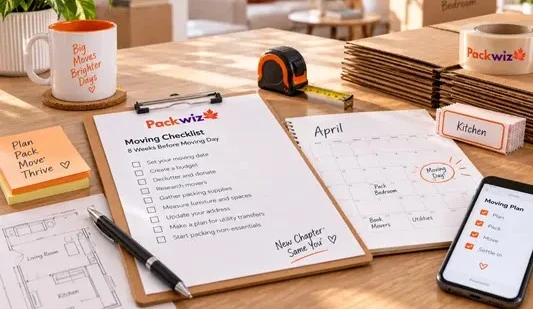
Moving checklist hero image
START HERE

How to use this moving checklist

Moving becomes much easier when you stop treating it as one giant task. Use this guide as a master moving checklist and work through it in stages.

The timeline begins eight weeks before moving day and gradually moves from planning and decluttering to packing, final preparation, moving day, and your first days in the new home. Your exact timeline may be shorter or longer depending on the size and complexity of your move.

For a local move in Toronto, Brampton, Mississauga, or elsewhere in the GTA, also check the rules of your building, condo, landlord, property manager, municipality, and moving company.

When should you start packing?

For many household moves, beginning the planning and decluttering process 6–8 weeks before moving day gives you room to work gradually. Start with items you rarely use and leave everyday essentials until the final stage.

What is the most important moving supply?

There is no single supply that matters most for every move. A practical starter set includes the right moving boxes, strong packing tape, cushioning material, labels, furniture protection and mattress protection.

STEP-BY-STEP PLAN

8-Week Moving Checklist

Work through these tasks in order. You do not have to complete every task exactly on the suggested week. The goal is to move from planning to packing gradually instead of leaving everything until the final few days.

01
8 weeks before moving day

Plan the move before you pack

This stage is about organization, budgeting, decluttering, scheduling and figuring out what actually needs to move.

Moving boxes, packing paper, tape and protected household belongings ready for a move
02
6 weeks before moving day

Start packing the things you rarely use

03
4 weeks before moving day

Build momentum and protect your belongings

04
3 weeks before moving day

Pack deeper into the home

05
2 weeks before moving day

Move from preparation into final packing

06
1 week before moving day

Finish most of the packing

07
The day before

Prepare for a smooth moving morning

MOVING DAY

Moving Day Checklist

The goal on moving day is simple: keep important items accessible, keep the move organized, protect the property, and make sure nothing is accidentally left behind.

01

Before loading

02

During loading

03

Final walk-through

04

At the new home

08
First 24 hours

Set up the essentials first

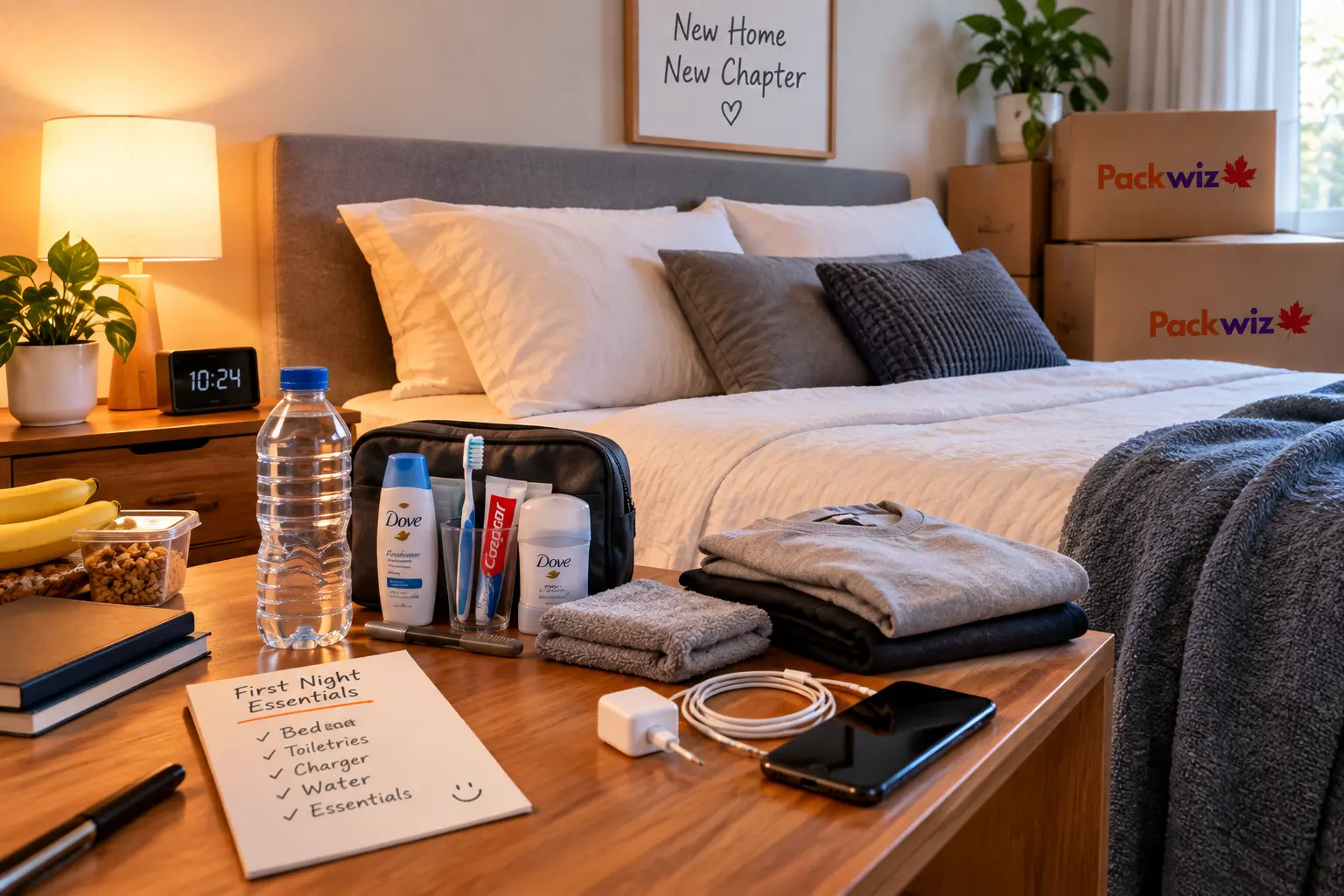
Essentials box with toiletries, paper towels, snacks, chargers, and other items for the first day in a new home
09
After the move

Finish the move without creating another mess

PACKING SUPPLIES

Moving Supplies Checklist

The exact amount of supplies depends on the size of your home, how much you own, how fragile your belongings are, and whether you are packing everything yourself. Start with the essentials below and adjust your quantities after doing a room-by-room inventory.

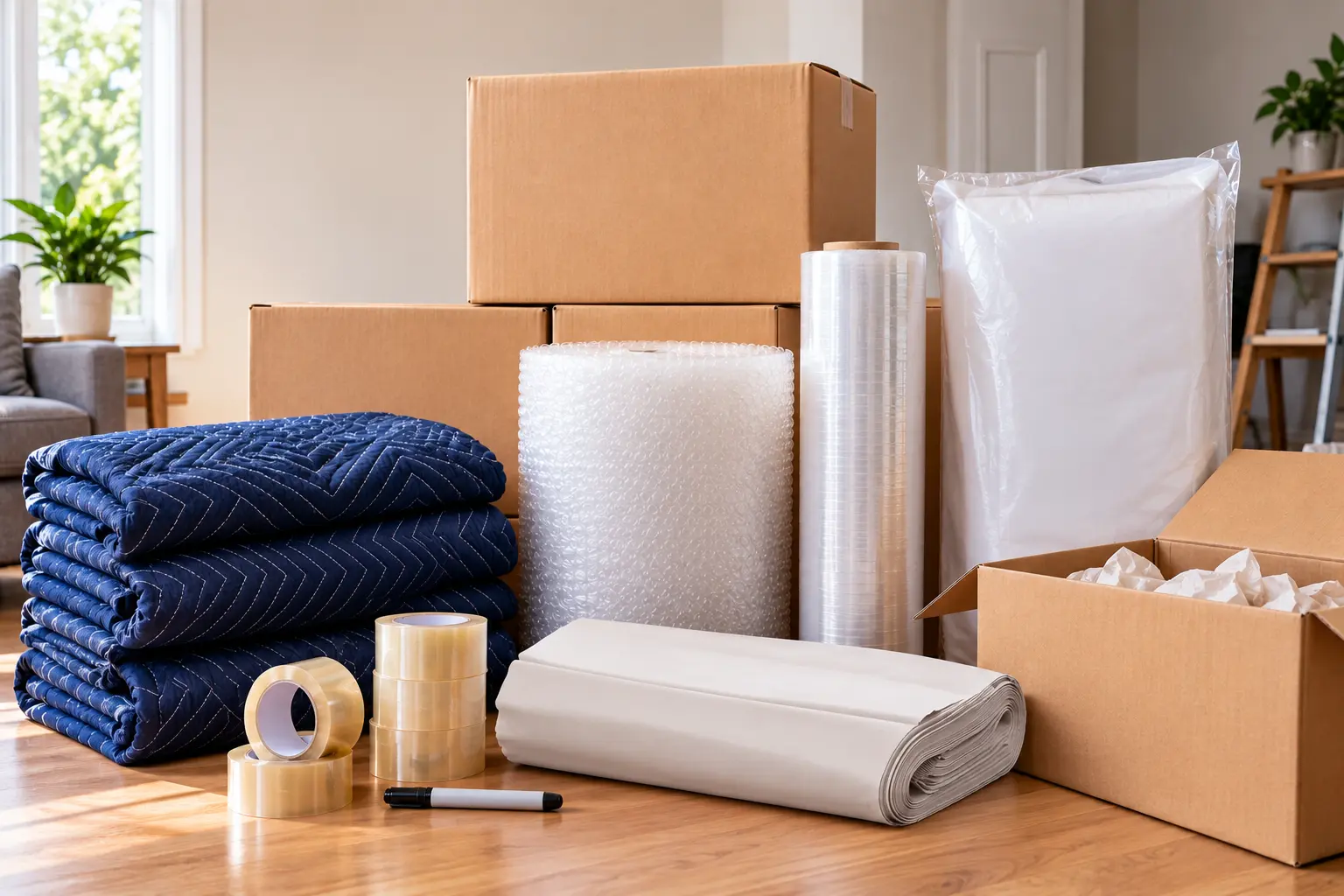
Moving boxes, packing tape, bubble wrap, packing paper, mattress bags, and other moving supplies
PACKWIZ

Shop moving and packing supplies

Packwiz offers moving boxes, wardrobe boxes, packing tape, bubble wrap, packing paper, mattress bags, moving protection and other packing supplies for residential and commercial moves.

Shop All Supplies
BOX GUIDE

Choosing the Right Moving Box

Using a mixture of box sizes is usually more practical than trying to pack everything into one size. Dense items should not be packed into oversized boxes simply because they technically fit.

SMALL

Dense & heavy items

Books, canned goods, small appliances, tools, documents and smaller household items.

MEDIUM

Everyday household items

Kitchenware, shoes, clothing, electronics, decorations and mixed household items.

LARGE

Lightweight bulky items

Pillows, blankets, linens and other lightweight items that take up more space without adding excessive weight.

WARDROBE

Hanging clothes

Use wardrobe boxes for suitable hanging clothing so it can move from the closet into the box with less folding and sorting.

TORONTO & GTA

GTA Condo & Apartment Moving Checklist

Moving in Toronto, Brampton, Mississauga or another GTA community can involve building rules that do not apply to a detached-home move. Check the specific requirements of your building and municipality before moving day.

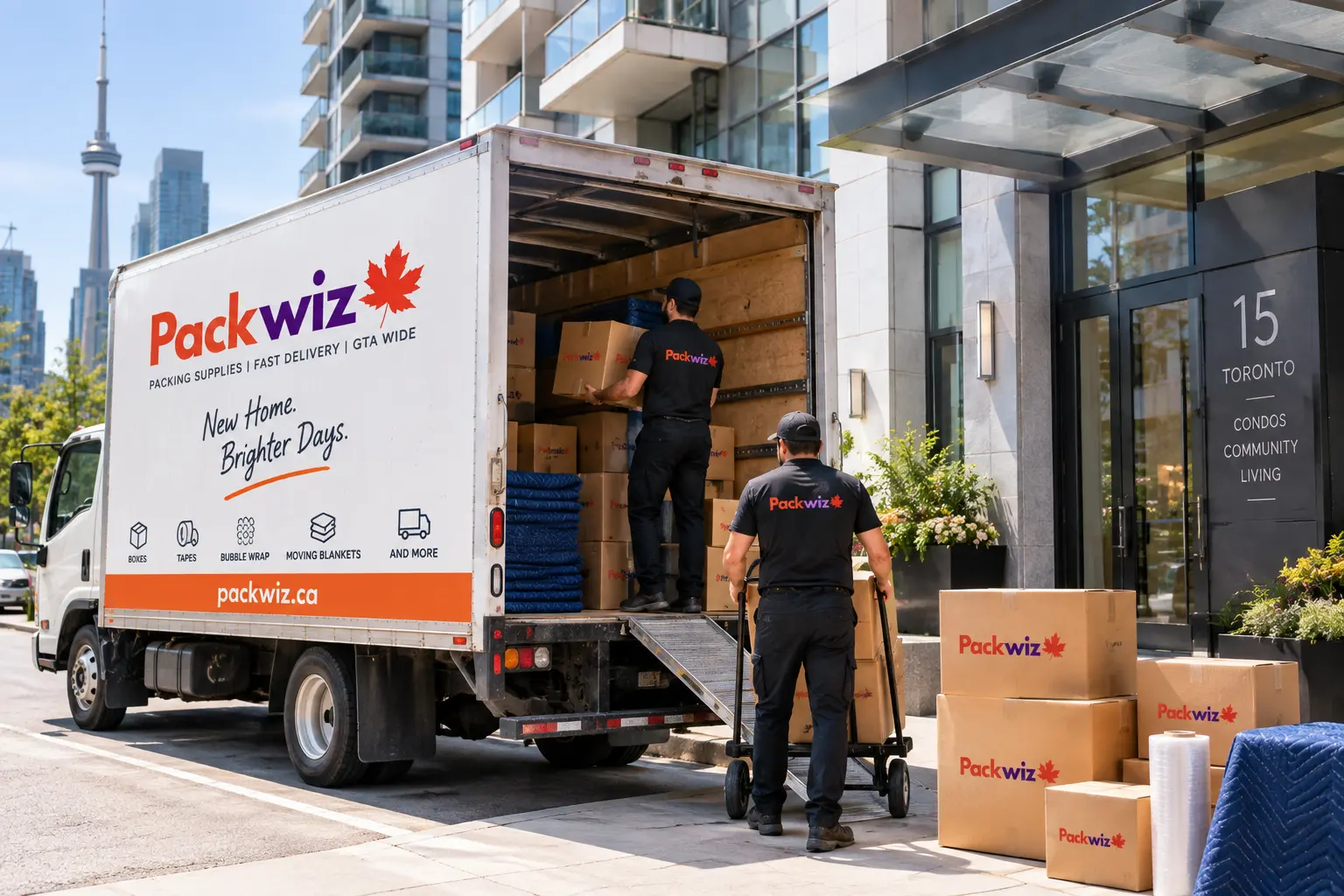
Moving truck with moving boxes and packing supplies
Planning a GTA move?

Packwiz is based in Brampton and supplies moving and packing products for residential and commercial customers across the Greater Toronto Area.

Learn more about Packwiz →
KEEP THIS WITH YOU

What Not to Put in Your Moving Boxes

Some belongings should be kept with you because they are valuable, irreplaceable, sensitive, or needed immediately.

  • Identification and important documents
  • Keys, access cards and important remotes
  • Wallet, cash and financial items
  • Prescription or essential medications
  • Phone, laptop and important chargers
  • Jewelry and irreplaceable valuables
  • Essential toiletries and a change of clothes
  • Important family, business or legal records
  • Your first-night essentials
Important:Moving companies and transportation providers may restrict certain hazardous, flammable, pressurized, or otherwise restricted materials. Always check the specific rules of your mover or vehicle provider before packing those items.
QUICK ANSWERS

Moving Checklist FAQ

Quick answers to common questions people ask when preparing for a move.

When should I start packing for a move?

A practical starting point for many household moves is about 6–8 weeks before moving day. Start by planning, decluttering, arranging movers, and gathering supplies. Pack rarely used items first, then gradually move toward everyday essentials as moving day approaches.

What should I pack first when moving?

Start with items you rarely use, including seasonal clothing, decorations, books you do not currently need, collections, spare linens, and specialty equipment. Leave everyday essentials for later so you can continue living normally while packing.

What should I pack last before moving day?

Pack the items you will need until the final hours last. This normally includes everyday toiletries, basic clothing, chargers, medications, basic kitchen items, cleaning supplies, tools, and bedding. Keep important documents and valuables with you rather than putting them into general moving boxes.

How many moving boxes do I need?

There is no single box count that fits every move because the amount depends on the home size, storage space, number of occupants, lifestyle, and amount of belongings. A better approach is to inventory each room, estimate by category, start with mixed box sizes, and adjust as packing progresses.

What moving supplies do I actually need?

Most household moves benefit from moving boxes, packing tape, packing paper, bubble wrap or another suitable cushioning material, labels or markers, stretch wrap, furniture protection such as moving blankets, and mattress protection. Your exact supply list depends on your furniture, fragile items, clothing, and packing method.

How do I pack fragile items safely?

Wrap fragile items individually where appropriate, cushion the bottom and sides of the box, separate items with suitable protective material, fill empty spaces, and avoid making fragile boxes unnecessarily heavy. Clearly label the box, but rely on proper packaging—not the label alone—to protect the contents.

What should stay with me during a move?

Keep identification, keys, wallet, medications, important documents, valuables, chargers, phones, critical electronics, and irreplaceable personal items with you whenever practical. You should also keep your essentials bag accessible throughout moving day.

How should I label moving boxes?

Label boxes with the destination room, a short description of the contents, and optionally a box number. Label at least two sides so the destination remains visible when boxes are stacked. A simple system makes unloading and unpacking much easier.

Do I need different moving boxes for different items?

Using different box sizes can make packing and carrying more manageable. Small and medium boxes are useful for dense items, while larger boxes are generally better suited to lightweight bulky belongings. Wardrobe boxes are designed for suitable hanging clothing.

What should I do with my mattress during a move?

Protect the mattress from dirt, moisture, and handling damage with an appropriately sized mattress protection bag. Keep the mattress dry and follow the manufacturer's or mover's handling guidance.

What should I do on moving day?

Keep essentials and valuables with you, complete a final walk-through, direct boxes to their destination rooms, track important items, take photos when appropriate, and verify keys and access information. At the new home, prioritize beds, bathroom essentials, basic food, and utilities before tackling the rest of the boxes.

READY TO PACK?

Get Your Moving Supplies Ready

From moving boxes and packing tape to bubble wrap, packing paper, mattress protection and other moving essentials, Packwiz helps make your next move easier to organize.

FURTHER READING

Moving advice from the Government of Canada

For additional consumer information about moving, review the Government of Canada's moving advice and planning resources.

View Government Resource ↗